Engineering the transfer of heat between fluids requires a unique set of skills that includes knowledge of the nature of liquids, chemicals, and mechanical engineering. Since the introduction of the first heat exchanger during the first industrial revolution, designers and engineers have worked diligently to perfect heat exchange processes to make them more efficient, innovative, and practical. Read More…
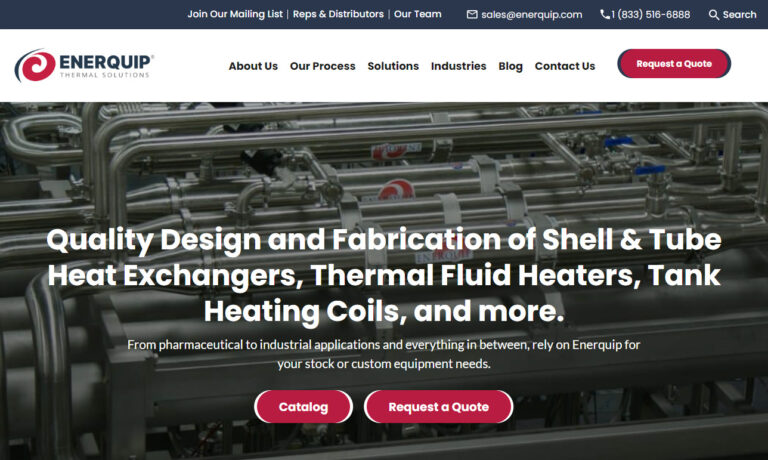
Enerquip is your trusted shell and tube heat exchanger partner. Our in-house, thermal design engineers and ASME welders and fabricators can design and build custom engineered solutions for your company’s specific needs. Our experience and expertise have earned us a preferred supplier status with leading companies in the pharmaceutical, food and beverage, cannabis, personal care, chemical,...
At Harris Thermal Transfer Products, we specialize in delivering cutting-edge heat exchangers designed to meet the diverse needs of our clients. We excel in producing a wide range of thermal management solutions, from standard models to highly customized systems. Our commitment to innovation and quality ensures that our heat exchangers provide superior performance, reliability, and efficiency.

Since 1947, Perry Products Corporation has been a trusted designer, manufacturer and long term heat exchanger partner for our customers. In addition to custom thermal engineered shell and tube heat exchangers, Perry maintains a line of partially fabricated but still customizable ASME heat exchangers in stock and ready to ship quick. Direct and honest communication and on time delivery is one of...

At Ward Vessel and Exchanger, we take pride in designing and manufacturing heat exchangers and pressure vessels that reflect the depth of our engineering experience and our dedication to long-term performance. We approach every project with a commitment to understanding our customers’ thermal and mechanical requirements, allowing us to create custom heat exchanger solutions that maximize...

Doucette Industries has been a leader in suction line heat exchangers, shell and tube heat exchangers, marine heat exchangers, plate heat exchangers and tube-in-tube water cooled condensers since 1975. We offer full customization services, and experienced staff, rapid response to your inquiries and a wide selection of cutting edge products. Please visit our website for more information.
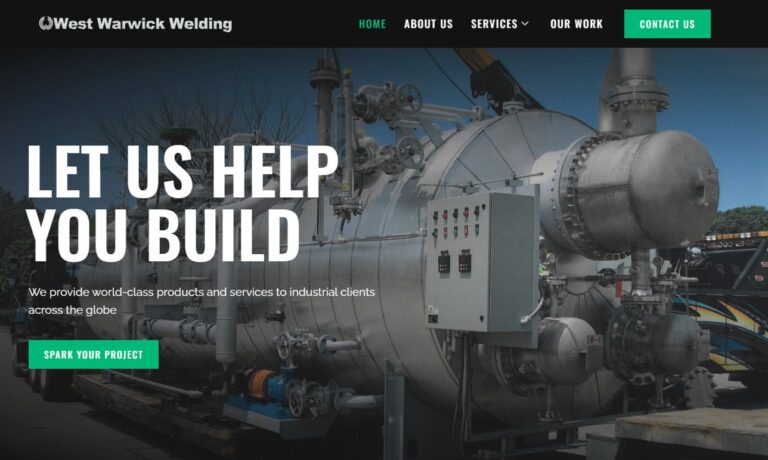
At West Warwick Welding, we bring together decades of fabrication experience and a commitment to precision workmanship to support customers who rely on durable, high-performance heat exchanger solutions. We operate as a fully integrated welding and fabrication shop, and we take pride in managing every stage of production with the same level of care, from the initial design consultation to the...



More Liquid-to-Liquid Heat Exchanger Manufacturers
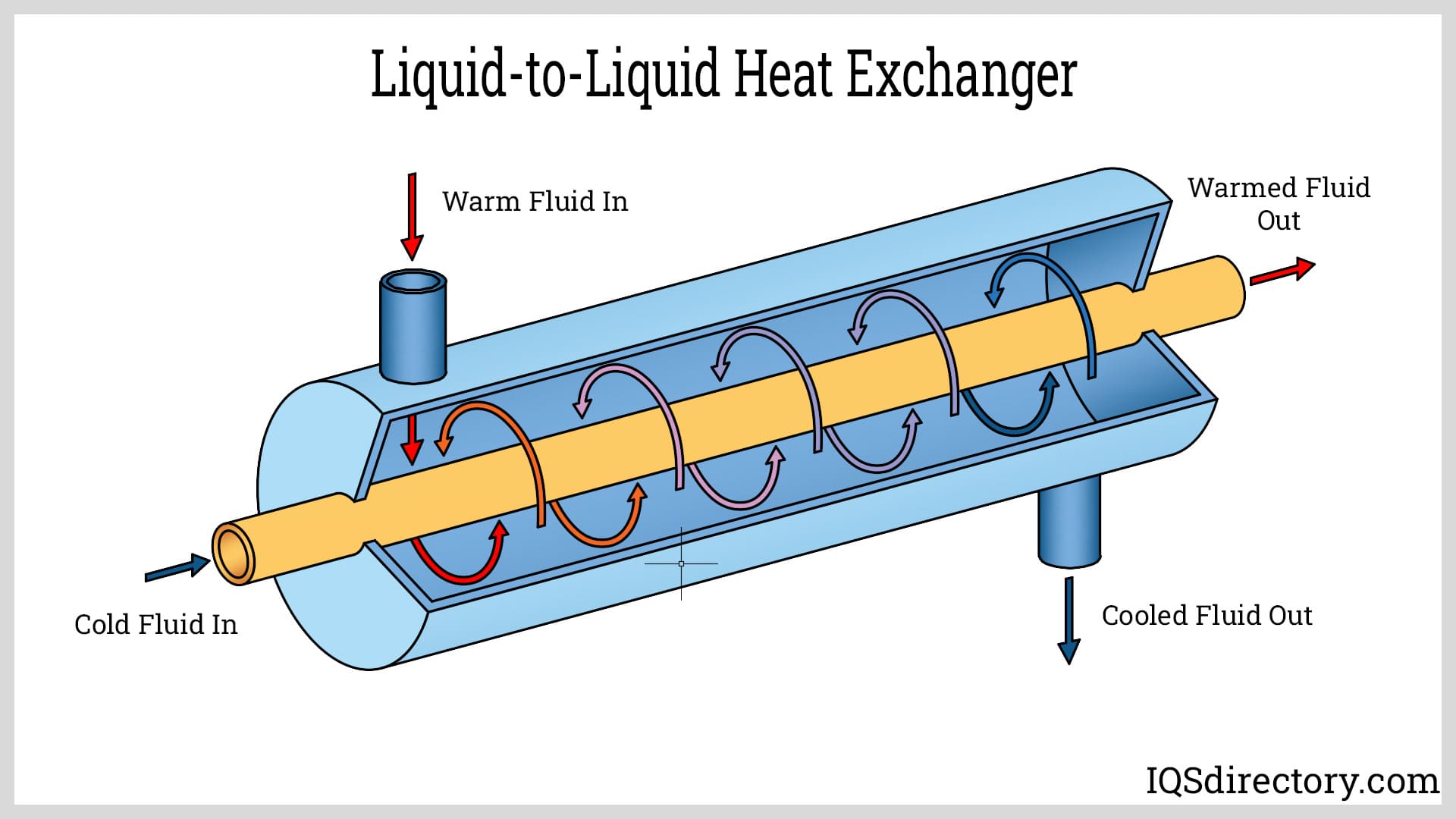
The results of the genius of these teams of engineers have been the development of the liquid-to-liquid heat exchanger that quickly removes heat from one liquid by transferring heat to another liquid of a lower temperature without the liquids making contact. This quick and efficient process has found multiple uses in a wide range of industrial applications and has become a staple in product production.
Selection Guide for Liquid-to-Liquid Heat Exchangers
The many varieties of liquid-to-liquid heat exchangers on the market make it difficult to find the right liquid-to-liquid heat exchanger for an application. In order to determine the best liquid-to-liquid heat exchanger for a process, it is important to have rudimentary knowledge of the characteristics of liquid-to-liquid heat exchangers.
The discussion of liquid-to-liquid heat exchangers can be endless due to the many varieties and types. In order to have a cogent and informative dialogue, it has been necessary to limit the investigation to the three most prominent and widely used liquid-to-liquid heat exchangers, which are plate and frame, shell and tube, and scraped surface.
The process requirements for a liquid-to-liquid heat exchanger come from the properties of the fluids to be treated. The types of fluids most people envision for a heat exchanger are water or forms of syrup. Although this is partially true, industrial fluids come in many varieties and include slug, viscose materials, and particulate matter fluids, which are more difficult to treat than traditional types.
The popularity and necessity of heat exchangers are in regard to their ability to remove heat. To understand their function, it is important to have a clear vision of the specific thermal requirements that a liquid-to-liquid heat exchanger can provide to meet the standards of an application. In addition, each application has a required output temperature regarding the amount of heat that has to be transferred and the temperature that is required during a process.
All forms of liquid-to-liquid heat exchangers provide efficient heat removal. In the selection process, it is important to determine the level that is required for a specific application. Highly viscous materials are more difficult to treat and require a special form of liquid-to-liquid heat exchanger. In addition, it takes a very special form of liquid-to-liquid heat exchanger to treat liquids with particulate matter. Knowledge of each of these factors is used by heat exchanger manufacturers and experts to select the correct liquid-to-liquid heat exchanger for a project in order that every aspect of a process will be successful.
Shell and Tube Liquid-to-liquid Heat Exchangers
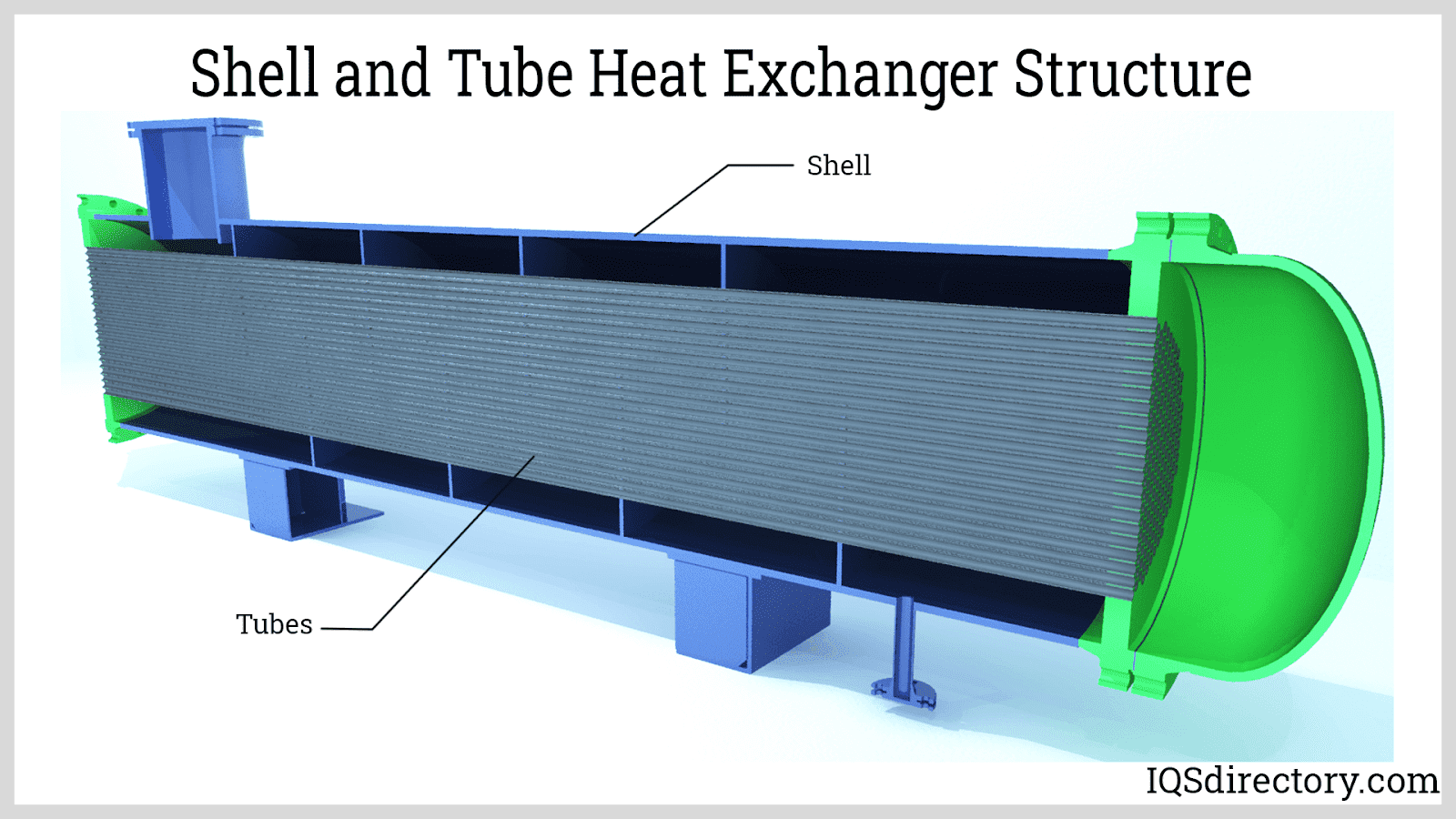
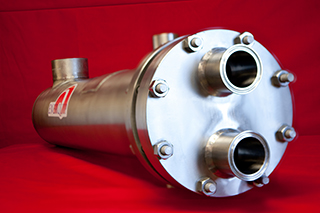
Shell and tube liquid-to-liquid heat exchangers consist of a bundle of parallel tubes immersed in a cylindrical shell that is filled with a process fluid. Inside the tubes is the tube side fluid. The fluid in the shell is the shell side fluid. The tube side fluid is separated from the shell side fluid by tube sheets. The two fluids have different pressures, with the higher pressure fluid flowing through the tubes.
The large size of shell and tube liquid-to-liquid heat exchangers makes them ideal for fluids that contain particles. In addition, the size of shell and tube liquid-to-liquid heat exchangers with their multiple tubes makes them capable of transferring heat under higher pressure than other designs. One of the problems with heat exchangers is fouling, which is prevented by the shell and tube design.
Fouling in a heat exchanger is the accumulation of materials from a fluid as it passes through a heat exchanger. It takes several forms, including crystals, sedimentation, corrosion, incrustation, scaling, and bacterial growth. Each of the different types of fouling is caused by a specific set of circumstances, such as crystallization caused by salts, while corrosion comes from the structural materials of a liquid-to-liquid heat exchanger.
Plate and Frame Liquid-to-Liquid Heat Exchanger
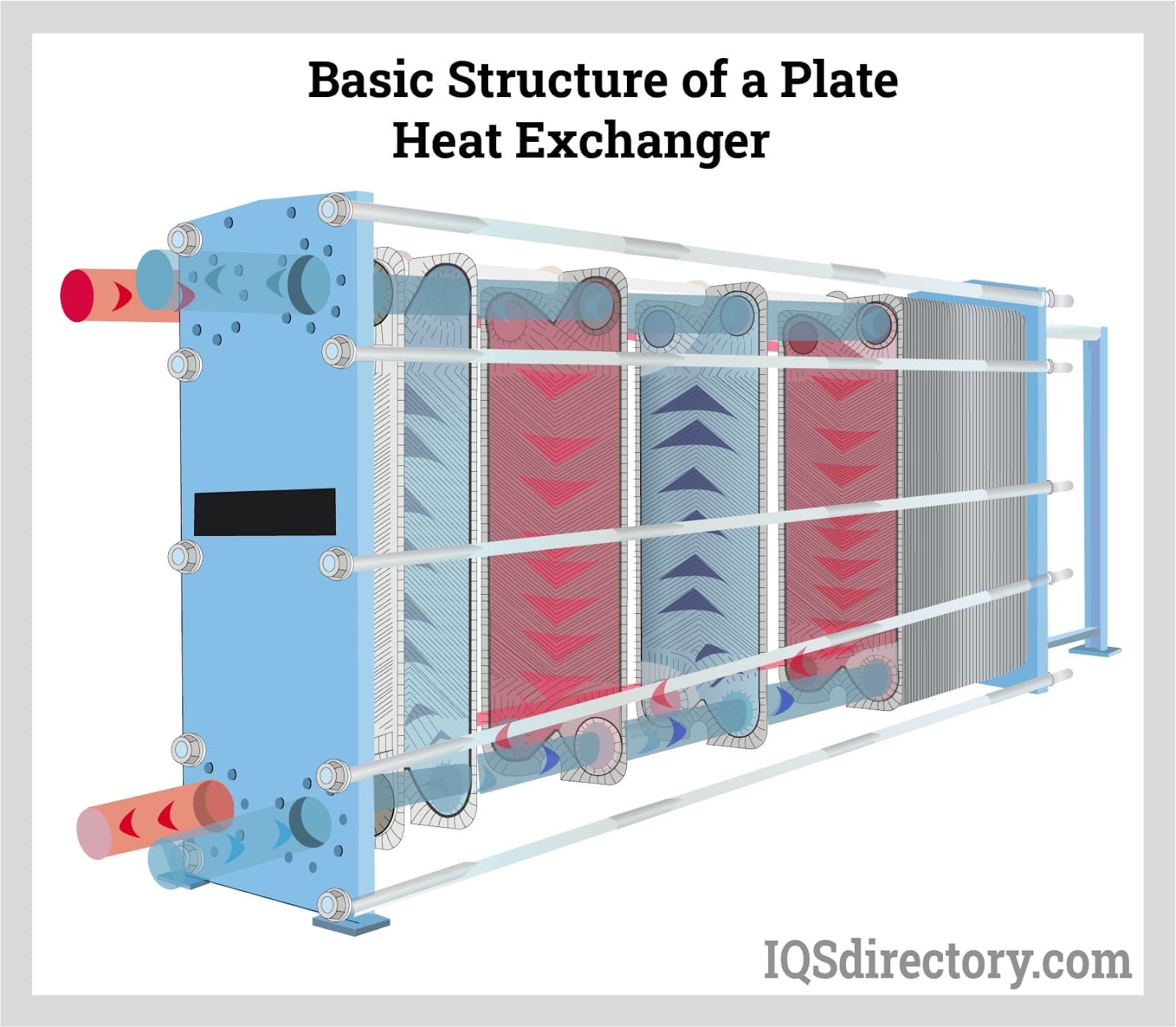
Plate and frame liquid-to-liquid heat exchangers have a series of stacked steel plates sealed with gaskets. The plates are the channels through which fluids flow and create turbulence and wall shear stress that increases the heat transfer coefficient and prevents fouling. Fluids enter a plate and frame liquid-to-liquid heat exchanger through two streams in opposite or counter directions.
The gaskets prevent the fluids from mixing as the pattern of the plates creates the counter current flow. The heat transfer process is provided by the plates through which the heat moves from one liquid to the other liquid. The compact design of plate and frame liquid-to-liquid heat exchangers makes them ideal for processes that have limited space.
Compared to shell and tube liquid-to-liquid heat exchangers, plate and frame heat exchangers are five times more efficient. They can operate for several years without the need for maintenance and can be easily adjusted to match the requirements of different process fluids. Unlike other forms of heat exchangers, plate and frame liquid-to-liquid heat exchangers are less expensive. They achieve exceptional counter current flow, providing highly efficient heat transfer with a low surface area.
Scraped Surface Liquid-to-liquid Heat Exchangers
The function that differentiates scraped surface liquid-to-liquid heat exchangers from all other forms is their ability to remove fouling from slug, viscous materials, and sticky gelatinous substances. Their ability to control thick materials has made scraped surface liquid-to-liquid heat exchangers an ideal choice for dealing with thick and particulate laden fluids. They are widely used by manufacturers that process fluids with high numbers of particles or have high viscosity.
The scraped surface design assists processors in rapidly moving batches for continuous uninterrupted processing. This characteristic of scraped surface liquid-to-liquid heat exchangers has made them the perfect choice for the pharmaceutical industry for meeting safety standards and purity requirements. As may be expected, continuous flow processing is a necessity for food production to assist in reducing waste and improving productivity. Scraped surface liquid-to-liquid heat exchangers provide phase changes for certain products, evaporation to cook, and are able to adapt to concentrate products, such as syrups, sauces, and the like.
Phase Changes
A consideration when determining the type of liquid-to-liquid heat exchanger is in regard to a heat exchanger’s phase changes, which identifies the categories of fluids or gases being processed. Liquid-to-liquid heat exchangers have two types of phase changes: single phase and two phase.
-
Single Phase – Single phase refers to a heat exchanger system where the matter being processed is the same, such as either gas or liquid.
-
Two Phase – When a single phase heat exchanger becomes a two phase heat exchanger, it is processing two different types of matter at the same time, such as liquid and gas together. In a two phase system, the physical and thermodynamic properties of fluids radically change.
Liquid-to-liquid Design Factors
Each type of liquid-to-liquid heat exchanger has a different heat transfer rate and operates at higher temperatures. High heat transfer rates can include different applications for cooling and heating products.
Although cost may be a primary factor when choosing a liquid-to-liquid heat exchanger, the effective processing of fluids has to take prominence and can be cost effective when selecting the right heat exchanger for an application. The success and effectiveness of a liquid-to-liquid heat exchanger can be amortized over several years due to the durability and dependability of the equipment.
A very relevant factor regarding liquid-to-liquid heat exchangers is their footprint, which can be very large or very small, depending on the available space. Size and shape have to be considered in regard to space limitations and may be the determining factor in the selection process. In cases where adjustments may be necessary over the years, plate and frame liquid-to-liquid heat exchangers are the best choice since, unlike shell and tube and scraped surface heat exchangers, they can be altered, adjusted, and reconfigured to meet application requirements.
This short overview of liquid-to-liquid heat exchanger selection process can serve as the ground work for speaking intelligently with heat exchanger manufacturers who have the expertise, know-how, and engineering excellence to assist in providing the best heat exchanger for an operation or process.
 Boilers
 Chillers
 Cooling Towers
 Furnaces
 Heat Exchangers
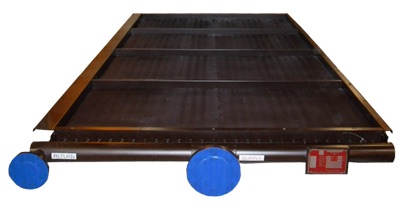 Heat Transfer Equipment
 Castings & Forgings
 Bulk Material Handling
 Electrical & Electronic Components
 Flow Instrumentation
 Hardware
 Material Handling Equipment
 Metal Cutting Services
 Metal Forming Services
 Metal Suppliers
 Motion Control Products
 Plant & Facility Equipment
 Plant & Facility Supplies
 Plastic Molding Processes
 Pumps & Valves
 Recycling Equipment
 Rubber Products & Services