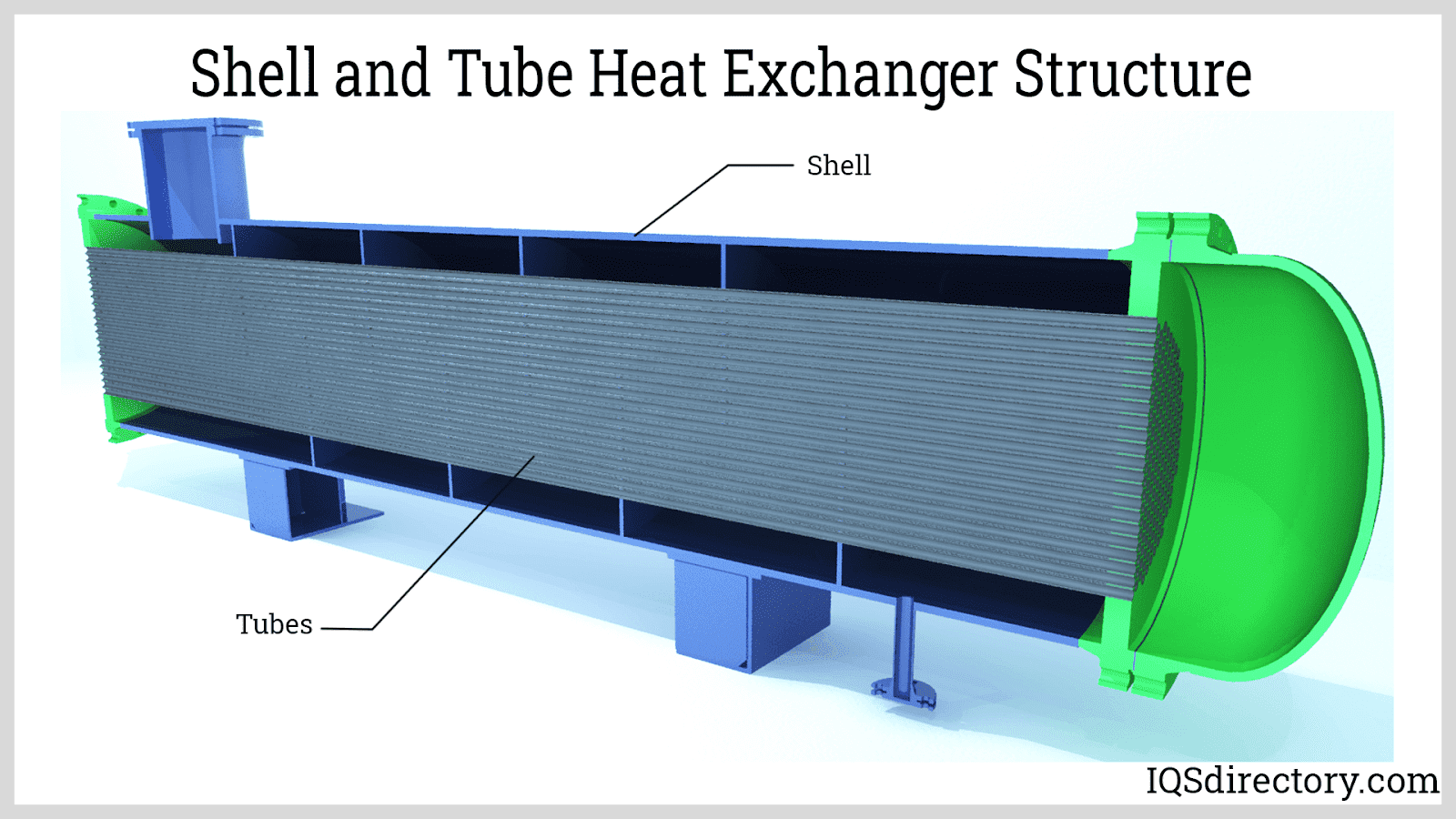
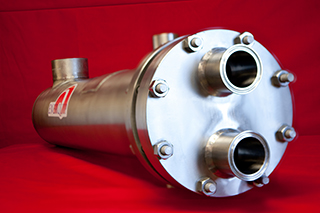
Shell and tube heat exchangers are comprised, as the name suggests, of an exterior shell with a bundle of tubes running through the middle of it. These exchangers are the most common type of tube heat exchangers used in the process, petroleum and HVAC industries, and are used widely in large chemical processes.
Shell and tube exchangers are intended for heating and cooling process fluids at high pressures and due to their design offer a large heat transfer area, making them a provider of high heat transfer efficiency. They are used widely as water to water heat exchangers and water to air heat exchangers. Read More…
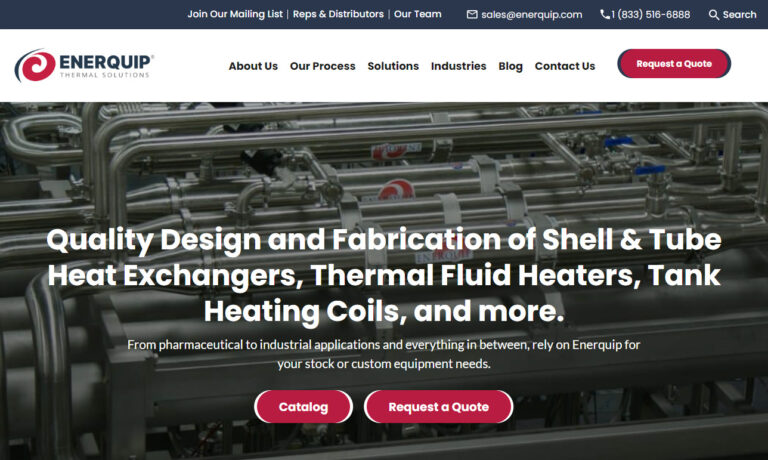
Enerquip is your trusted shell and tube heat exchanger partner. Our in-house, thermal design engineers and ASME welders and fabricators can design and build custom engineered solutions for your company’s specific needs. Our experience and expertise have earned us a preferred supplier status with leading companies in the pharmaceutical, food and beverage, cannabis, personal care, chemical,...
At Harris Thermal Transfer Products, we specialize in delivering cutting-edge heat exchangers designed to meet the diverse needs of our clients. We excel in producing a wide range of thermal management solutions, from standard models to highly customized systems. Our commitment to innovation and quality ensures that our heat exchangers provide superior performance, reliability, and efficiency.

Since 1947, Perry Products Corporation has been a trusted designer, manufacturer and long term heat exchanger partner for our customers. In addition to custom thermal engineered shell and tube heat exchangers, Perry maintains a line of partially fabricated but still customizable ASME heat exchangers in stock and ready to ship quick. Direct and honest communication and on time delivery is one of...

At Ward Vessel and Exchanger, we take pride in designing and manufacturing heat exchangers and pressure vessels that reflect the depth of our engineering experience and our dedication to long-term performance. We approach every project with a commitment to understanding our customers’ thermal and mechanical requirements, allowing us to create custom heat exchanger solutions that maximize...

Doucette Industries has been a leader in suction line heat exchangers, shell and tube heat exchangers, marine heat exchangers, plate heat exchangers and tube-in-tube water cooled condensers since 1975. We offer full customization services, and experienced staff, rapid response to your inquiries and a wide selection of cutting edge products. Please visit our website for more information.
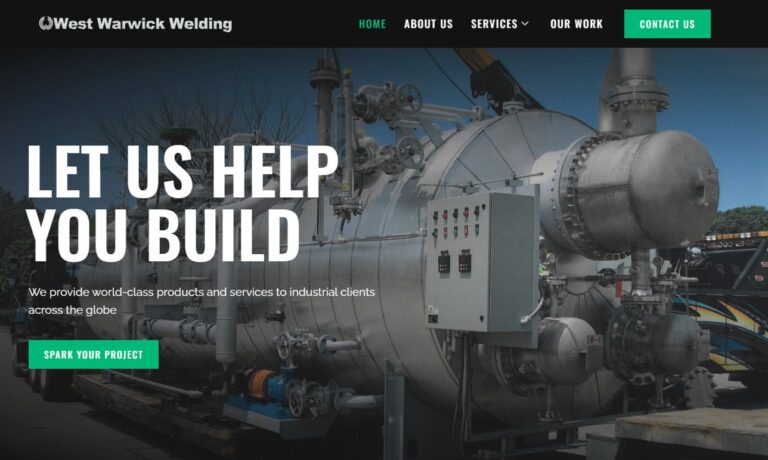
At West Warwick Welding, we bring together decades of fabrication experience and a commitment to precision workmanship to support customers who rely on durable, high-performance heat exchanger solutions. We operate as a fully integrated welding and fabrication shop, and we take pride in managing every stage of production with the same level of care, from the initial design consultation to the...



More Shell and Tube Heat Exchanger Manufacturers
Shell and Tube Heat Exchangers: Design, Applications, and Benefits
Shell and tube heat exchangers are among the most widely used types of industrial heat exchangers due to their robust design, versatility, and high efficiency. With applications spanning industries such as power generation, chemical processing, oil and gas, HVAC, marine, and more, these heat exchangers play a crucial role in transferring thermal energy between two fluids. Understanding their construction, operational principles, and selection criteria is essential for engineers, facility managers, and procurement specialists seeking optimal heat transfer solutions.
How Do Shell and Tube Heat Exchangers Work?
The core principle behind shell and tube heat exchangers is maximizing the surface area available for efficient heat transfer between two fluids, which may be liquids, gases, or a combination. A typical shell and tube heat exchanger consists of a pressure vessel (the shell) that houses a bundle of tubes. One fluid flows through the tubes (the tube side), while the other fluid flows over and around the tubes within the shell (the shell side). The thermal energy is exchanged through the conductive walls of the tubes, allowing for reliable temperature regulation without direct mixing of the fluids.
Why is surface area so important in heat exchanger design? The larger the surface area available for heat exchange, the greater the amount of heat that can be transferred in a given period. This is why bundles of tubes are strategically arranged inside the shell – to maximize the contact area and enhance the overall thermal performance of the system.
Depending on process requirements, shell and tube heat exchangers can be designed with different tube configurations, including straight tubes, U-tubes, or even finned tubes to further increase the heat exchange surface.
Material Selection and Durability Considerations
The choice of tube material is a critical aspect of shell and tube heat exchanger design. Tube walls must be made of a thermally conductive material to facilitate rapid heat transfer. However, because one side of the tube is exposed to a different temperature than the other, the material must also withstand thermal stress and potential corrosion, especially under high-pressure operating conditions.
Common tube materials include:
- Copper alloys: Excellent thermal conductivity and corrosion resistance, often used in HVAC and refrigeration applications.
- Stainless steel: High strength, corrosion resistance, and durability; suitable for aggressive chemical processes and high-pressure environments.
- Carbon steel: Cost-effective for non-corrosive applications, commonly found in power plants and industrial manufacturing.
- Nickel and titanium: Exceptional corrosion resistance and mechanical stability, ideal for seawater, petrochemical, and marine heat exchangers.
Choosing the right material involves balancing thermal performance, mechanical strength, cost, and resistance to fouling or scaling. Learn more about selecting the ideal heat exchanger manufacturer to ensure material quality and compliance with industry standards.
Key Features and Customization Options
Shell and tube heat exchangers can be tailored to meet diverse operational needs. Features may include:
- Removable tube bundles for easy cleaning and maintenance.
- Multiple pass arrangements (single-pass, two-pass, four-pass) to increase heat transfer efficiency by allowing fluids to traverse the tubes several times.
- Baffles within the shell to direct fluid flow, reduce dead zones, and enhance turbulence for better heat transfer.
- Floating head or fixed head designs to accommodate thermal expansion and simplify servicing.
- Special coatings and linings to resist chemical attack or fouling in aggressive process environments.
Customization options also include variations in shell diameter, tube diameter, tube length, tube pitch, and the use of enhanced surface tubes or finned tubes. These factors directly influence the heat exchanger’s performance, pressure drop, and maintenance requirements.
Typical Applications of Shell and Tube Heat Exchangers
Where are shell and tube heat exchangers used? Their versatility and reliability make them a staple in a wide range of industries and processes. Common applications include:
- Power Generation: Used in steam condensers, feedwater heaters, boiler systems, and nuclear power plants to recover and redistribute waste heat.
- Chemical and Petrochemical Processing: Essential for cooling, heating, condensing, or evaporating process fluids under demanding conditions.
- Oil and Gas Industry: Applied in oil refineries, gas processing, and offshore platforms for heat recovery and process fluid conditioning.
- HVAC Systems: Integral to chillers, refrigeration, and air conditioning systems for efficient temperature control.
- Marine and Shipbuilding: Used for engine cooling, lube oil cooling, and desalination plants.
- Pharmaceuticals and Food Processing: Maintain precise temperature control during sensitive manufacturing processes.
- Industrial Manufacturing: Waste heat recovery, compressor cooling, hydraulic system temperature regulation, and vapor recovery systems.
Shell and tube heat exchangers are versatile enough to handle both liquids and gases, making them suitable for a wide spectrum of heat transfer applications.
Advantages of Shell and Tube Heat Exchangers
Why choose a shell and tube heat exchanger over other types?
- High thermal efficiency: Large surface area and customizable flow arrangements maximize heat transfer.
- Robust construction: Suitable for high-pressure and high-temperature applications.
- Versatility: Can handle a wide range of fluids, including corrosive or viscous substances.
- Ease of maintenance: Removable tube bundles and accessible designs simplify cleaning and inspection.
- Scalability: Easily adapted for both small- and large-scale industrial operations.
- Energy and cost savings: Efficient waste heat recovery reduces energy consumption and operating costs.
This method of heat exchange not only conserves energy but also contributes to a more sustainable and cost-effective operation by recovering and repurposing waste heat from industrial processes.
Factors to Consider When Selecting a Shell and Tube Heat Exchanger
Choosing the optimal shell and tube heat exchanger involves evaluating several key criteria:
- Process requirements: What are the inlet and outlet temperatures, flow rates, and pressure levels?
- Fluid properties: Are the fluids corrosive, fouling, or viscous?
- Thermal performance: What is the required heat transfer rate (U-value) and allowable pressure drop?
- Material compatibility: Which tube and shell materials best resist corrosion and thermal stress in your process?
- Space and installation limits: Are there restrictions on the physical size or configuration?
- Maintenance accessibility: Is routine cleaning or inspection required?
- Regulatory compliance: Does the application require ASME, TEMA, or other industry certifications?
For help with sizing and selection, consider using a heat exchanger calculator or consult with an experienced heat exchanger manufacturer to ensure your equipment meets all operational and safety requirements.
Shell and Tube Heat Exchanger Maintenance and Troubleshooting
Proper maintenance extends the lifespan and efficiency of any shell and tube heat exchanger. Key maintenance tasks include:
- Regular inspection of tube bundles for signs of fouling, corrosion, or wear.
- Cleaning to remove scale and deposits that reduce thermal conductivity.
- Leak testing to detect tube failures or gasket issues.
- Baffle and support checks to ensure structural integrity.
- Monitoring temperature and pressure differentials for early detection of performance issues.
Common troubleshooting questions include:
- Why is my heat exchanger experiencing reduced heat transfer efficiency?
- What should I do if I detect a tube leak or pressure drop?
- How often should I clean and inspect my shell and tube exchanger?
- Which cleaning method is best for stubborn fouling or scaling?
For more detailed answers, refer to our comprehensive Shell and Tube Heat Exchanger Maintenance Guide.
Comparing Shell and Tube Heat Exchangers to Other Types
When evaluating heat exchanger options, it’s important to compare shell and tube exchangers to alternatives such as plate heat exchangers, finned tube exchangers, and air-cooled heat exchangers:
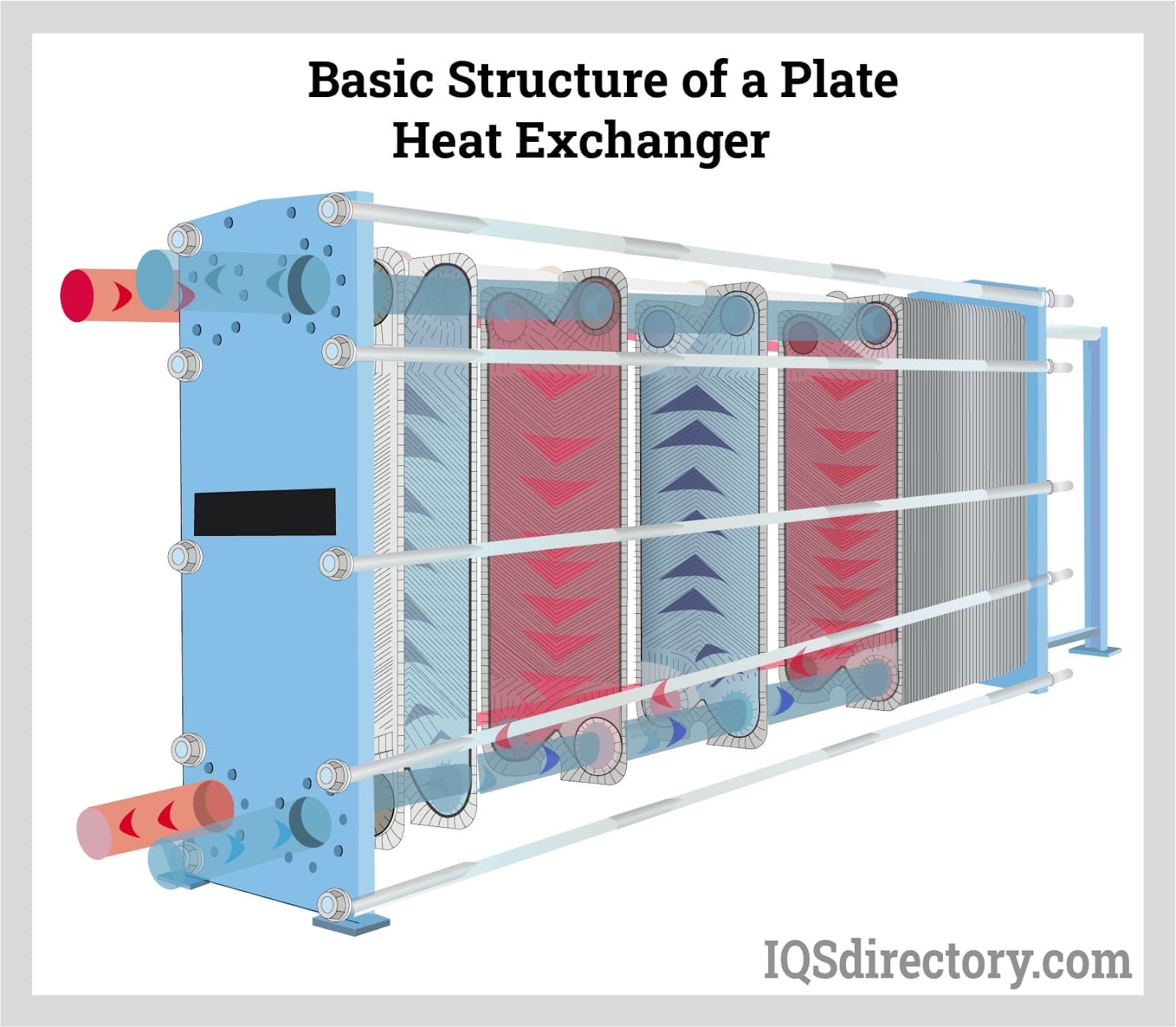
- Plate Heat Exchangers: Offer higher thermal efficiency for compact designs, ideal for space-limited installations, but may not handle high pressures as effectively as shell and tube models.
- Finned Tube Heat Exchangers: Enhance heat transfer for air-to-liquid applications, commonly used in HVAC or automotive systems.
- Air-Cooled Heat Exchangers: Use ambient air for cooling, suitable for remote locations without access to cooling water but may require larger footprints.
Shell and tube heat exchangers remain the preferred choice for high-pressure, high-temperature, and large-capacity applications due to their durability, flexibility, and ease of maintenance.
Frequently Asked Questions About Shell and Tube Heat Exchangers
What industries benefit most from shell and tube heat exchangers?
Industries such as power generation, oil and gas, chemical processing, marine, pharmaceuticals, and food and beverage manufacturing rely heavily on shell and tube heat exchangers for efficient thermal energy management.
How do I size a shell and tube heat exchanger?
Sizing is based on factors such as required heat duty, flow rates, allowable pressure drop, fluid properties, and available installation space. It’s best to use a heat exchanger sizing calculator or consult with an expert manufacturer.
Can shell and tube exchangers handle corrosive fluids?
Yes, with proper material selection (such as stainless steel, nickel, or titanium), shell and tube heat exchangers can safely handle corrosive fluids found in chemical processing and marine applications.
What maintenance is required for optimal performance?
Regular inspection, cleaning, leak testing, and monitoring of temperature/pressure are essential for reliable operation and longevity. Removable tube bundles simplify maintenance procedures.
How does a shell and tube design compare to a plate heat exchanger?
Shell and tube designs are more robust and better suited for high-pressure, high-temperature, and large-flow applications. Plate heat exchangers offer greater efficiency in compact, lower-pressure systems.
Still have questions? Contact our heat exchanger specialists for personalized guidance.
Get Started: Choosing the Right Shell and Tube Heat Exchanger for Your Application
Are you seeking a reliable, energy-efficient solution for industrial heat transfer? Shell and tube heat exchangers offer unparalleled versatility and performance for a wide array of process requirements. Whether you’re upgrading existing equipment, designing a new system, or optimizing energy recovery, selecting the right heat exchanger design is critical to your project’s success.
To explore available models, request a custom quote, or connect with leading manufacturers, visit our Heat Exchanger Manufacturer Directory. For technical support, troubleshooting, or application engineering, our team of experienced specialists is ready to help.
Maximize your process efficiency, reduce energy costs, and ensure long-term reliability with the right shell and tube heat exchanger solution for your facility. Start your search today or ask our experts for a free consultation.
 Boilers
 Chillers
 Cooling Towers
 Furnaces
 Heat Exchangers
 Heat Transfer Equipment
 Castings & Forgings
 Bulk Material Handling
 Electrical & Electronic Components
 Flow Instrumentation
 Hardware
 Material Handling Equipment
 Metal Cutting Services
 Metal Forming Services
 Metal Suppliers
 Motion Control Products
 Plant & Facility Equipment
 Plant & Facility Supplies
 Plastic Molding Processes
 Pumps & Valves
 Recycling Equipment
 Rubber Products & Services